
Monitoring with Raspberry Shake & Boom
Concerned about
Data Center Noise?
You’re not alone.
Communities across the country are asking the same question: What impact will that new data center have on my neighborhood? As data center construction accelerates, residents living nearby are looking for reliable, scientific-grade tools to understand and document the acoustic environment around their homes.
Whether a facility is proposed, under construction, or already operating, having objective, continuous data is the first step toward understanding what’s happening and the Raspberry Shake & Boom is the instrument people are turning to.
The only instrument that captures both.
The RS&BOOM is the only instrument on the market that combines a professional-grade seismograph with a precision infrasound sensor in a single, synchronized unit. Data centers operate powerful cooling and ventilation systems around the clock, the RS&BOOM captures both data streams, giving you a complete picture of the acoustic footprint of nearby infrastructure.
What is infrasound, and why does it matter?
Infrasound refers to sound waves below 20 Hz — the lower threshold of typical human hearing. You may not consciously “hear” these frequencies, but they represent real, measurable atmospheric pressure fluctuations. The RS&BOOM detects from approximately 0.05 Hz to 40 Hz — capturing the full range of low-frequency acoustic output from large industrial facilities.
Deploy your RS&BOOM before the facility becomes operational.
This kind of longitudinal data is far more powerful than a single measurement taken after the fact.
Raspberry Shake & Boom.
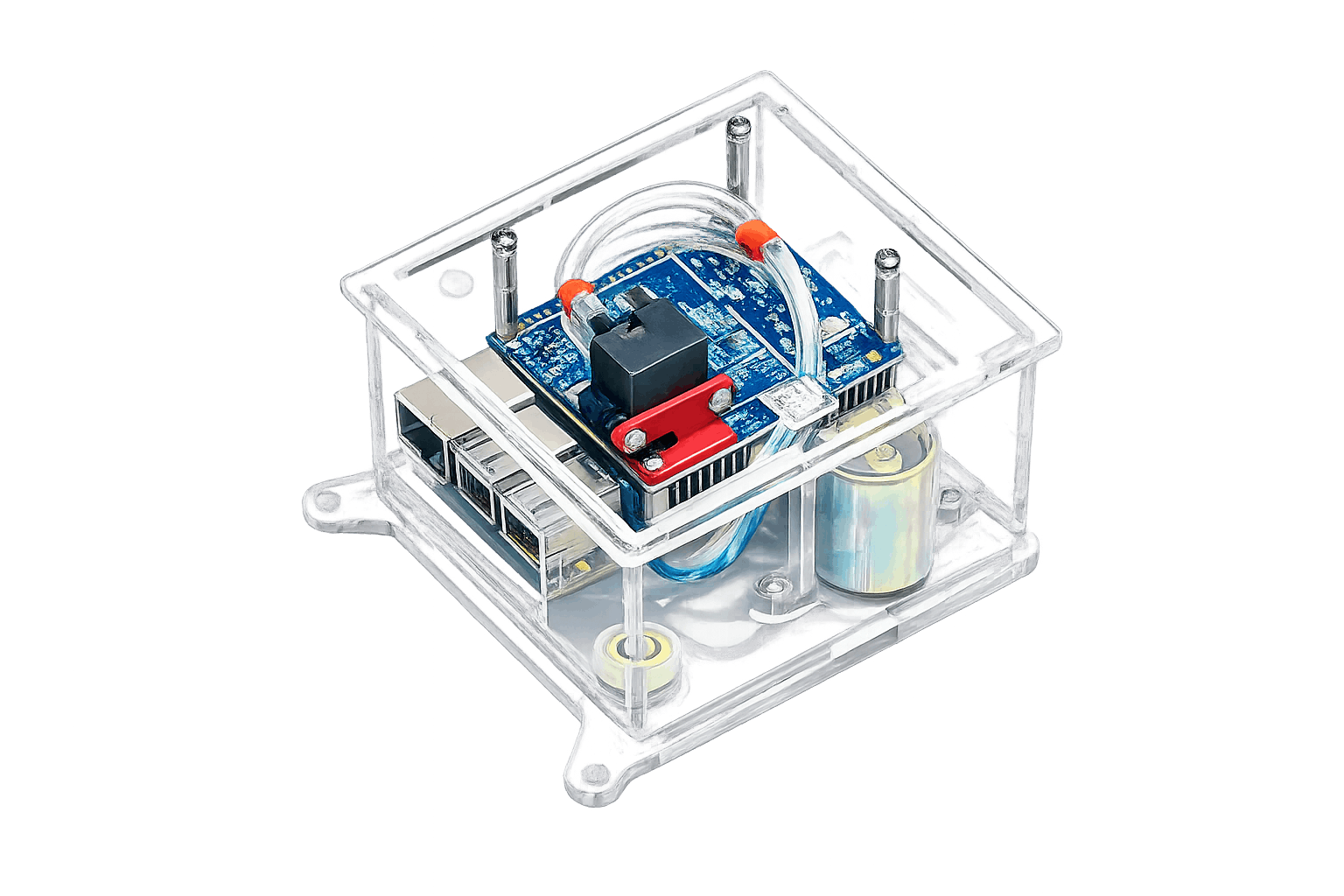
A professional-grade seismograph and a precision infrasound sensor — captured on a single, synchronized unit. The infrasound sensor is the critical component for data center monitoring.
Geophone
Infrasound transducer
Tubed differential pressure sensor that captures atmospheric infrasound from 0.05 Hz upward
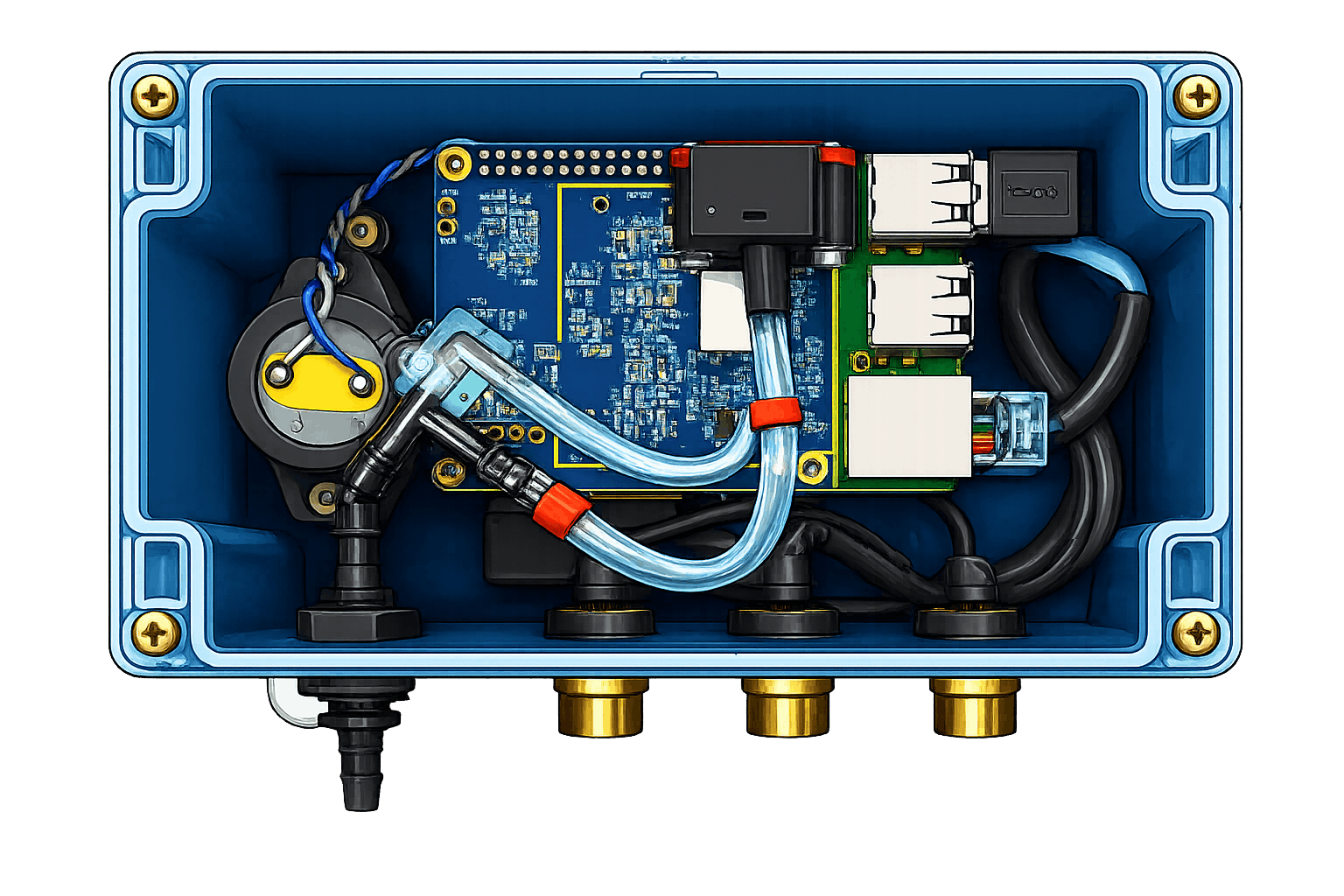
Raspberry Pi compute
Streams to DataView over Ethernet and records locally as a fallback.
IP67 enclosure
Sealed against weather and dust on the outdoor model — brass bushings mount the device to any surface.
For data center monitoring, we recommend the RS&BOOM.
It is purpose-built for this application because it captures both seismic (ground vibration) and infrasonic (atmospheric pressure) signals.
The infrasound sensor is the critical component for data center monitoring. Large cooling systems and ventilation equipment generate significant low-frequency atmospheric pressure waves, and the RS&BOOM is specifically designed to detect these.
Note. The RBOOM (infrasound-only sensor) was discontinued several years ago. The RS&BOOM replaces it with the added benefit of simultaneous ground vibration monitoring.
.rs-feat, .rs-feat *{box-sizing:border-box !important}
.rs-feat{max-width:980px !important;margin:0 auto !important;border:1px solid #e6e9f5 !important;border-radius:16px
!important;background:#fff !important;overflow:hidden !important;font-family:Roboto,Arial,sans-serif !important}
.rs-feat__row{display:grid !important;grid-template-columns:220px 1fr !important;padding:20px 28px
!important;align-items:baseline !important;gap:24px !important;border-top:1px solid #e6e9f5 !important;margin:0
!important;transition:background 150ms ease !important}
.rs-feat__row:first-child{border-top:0 !important}
.rs-feat__row–link{cursor:pointer !important}
.rs-feat__row–link:hover{background:#f6f8ff !important}
.rs-feat__name{font-family:Roboto,Arial,sans-serif !important;font-weight:700 !important;font-size:18px
!important;color:#00213c !important;letter-spacing:-.02em !important;margin:0 !important;padding:0
!important;line-height:1.3 !important;display:flex !important;align-items:center !important}
.rs-feat__num{font-family:”SF Mono”,ui-monospace,monospace !important;font-size:12px !important;color:#1e63fb
!important;margin-right:12px !important;font-weight:600 !important}
.rs-feat__arrow{display:inline-block !important;margin-left:8px !important;font-size:14px !important;color:#1e63fb
!important;transition:transform 150ms ease !important}
.rs-feat__row–link:hover .rs-feat__arrow{transform:translate(3px,-3px) !important}
.rs-feat__desc{font-family:Roboto,Arial,sans-serif !important;font-size:15px !important;line-height:22px
!important;color:#64607d !important;margin:0 !important;padding:0 !important;font-weight:400 !important}
.rs-feat__sublinks{display:inline-flex !important;gap:14px !important;margin-left:12px !important;font-size:13px
!important;font-weight:600 !important}
.rs-feat__sublinks a{color:#1e63fb !important;text-decoration:none !important}
.rs-feat__sublinks a:hover{text-decoration:underline !important}
@media (max-width:600px){
.rs-feat__row{grid-template-columns:1fr !important;padding:16px 18px !important;gap:6px !important}
.rs-feat__name{font-size:16px !important}
.rs-feat__desc{font-size:14px !important;line-height:21px !important}
.rs-feat__sublinks{margin-left:0 !important;margin-top:6px !important;display:flex !important}
}
time.
officials.
Where should I place my RS&BOOM — and what do I need to get going?
.rs-place{display:grid !important;grid-template-columns:1.2fr 1fr 1fr !important;gap:0 !important;border:1px solid #e6e9f5
!important;border-radius:20px !important;overflow:hidden !important;background:#fff
!important;font-family:Roboto,Arial,sans-serif !important;max-width:1180px !important;margin:0 auto !important}
.rs-place__col{padding:28px !important;display:flex !important;flex-direction:column !important;gap:12px
!important;border-right:1px solid #e6e9f5 !important;margin:0 !important}
.rs-place__col:last-child{border-right:0 !important}
.rs-place__col–primary{background:#ebf3ff !important}
.rs-place__eyebrow{font-family:Roboto,Arial,sans-serif !important;font-weight:700 !important;font-size:11px
!important;letter-spacing:.14em !important;text-transform:uppercase !important;color:#1e63fb !important;margin:0
!important;padding:0 !important}
.rs-place__eyebrow–dark{color:#170f49 !important}
.rs-place__title{font-family:Roboto,Arial,sans-serif !important;font-weight:700 !important;font-size:20px
!important;color:#00213c !important;letter-spacing:-.01em !important;line-height:26px !important;margin:0
!important;padding:0 !important}
.rs-place__text{font-family:Roboto,Arial,sans-serif !important;font-size:14px !important;line-height:21px
!important;color:#64607d !important;margin:0 !important;padding:0 !important;font-weight:400 !important}
.rs-place__list{list-style:none !important;padding:0 !important;margin:14px 0 0 !important;display:flex
!important;flex-direction:column !important;gap:10px !important}
.rs-place__item{display:flex !important;gap:10px !important;align-items:flex-start !important;margin:0
!important;padding:0 !important;font-family:Roboto,Arial,sans-serif !important;font-size:14px !important;line-height:20px
!important;color:#161c2d !important}
.rs-place__check{width:18px !important;height:18px !important;border-radius:50% !important;background:#1e63fb
!important;display:inline-flex !important;align-items:center !important;justify-content:center !important;flex-shrink:0
!important;margin-top:3px !important}
.rs-place__check svg{display:block !important;width:10px !important;height:8px !important}
.rs-place__note{font-family:Roboto,Arial,sans-serif !important;font-size:12px !important;line-height:18px
!important;color:#64607d !important;margin:16px 0 0 !important;padding-top:14px !important;border-top:1px solid
rgba(0,33,60,0.1) !important;font-weight:400 !important}
.rs-place__note strong{color:#00213c !important;font-weight:700 !important}
@media (max-width:900px){
.rs-place{grid-template-columns:1fr !important}
.rs-place__col{border-right:0 !important;border-bottom:1px solid #e6e9f5 !important;padding:22px !important}
.rs-place__col:last-child{border-bottom:0 !important}
}
-
Choose a location between your home and the data center if possible -
Place it on any stable floor surface -
Minimize local noise sources. Keep distance from HVAC units, washing machines, generators, and heavy foot
traffic -
Prioritize Ethernet. A wired connection ensures reliable, uninterrupted data transmission
Below ground? No. Given the 0.7 Hz corner frequency, a standard surface
installation provides excellent performance.
Ideal for any indoor room on any floor surface.
Ideal for deployment in outbuildings, pole barns, or purpose-built vaults.
.rs-faq{max-width:980px !important;margin:0 auto !important;font-family:Roboto,Arial,sans-serif !important;padding:0
!important}
.rs-faq__eyebrow{color:#3734a9 !important;font-weight:600 !important;font-size:14px !important;letter-spacing:.04em
!important;text-transform:uppercase !important;margin:0 !important;padding:0 !important}
.rs-faq__title{font-family:Roboto,Arial,sans-serif !important;font-weight:700 !important;font-size:44px
!important;line-height:52px !important;letter-spacing:-1.6px !important;color:#00213c !important;margin:14px 0 40px
!important;padding:0 !important}
.rs-faq__list{background:#fff !important;border:1px solid #e6e9f5 !important;border-radius:16px !important;overflow:hidden
!important;list-style:none !important;padding:0 !important;margin:0 !important}
.rs-faq__item{border-bottom:1px solid #e6e9f5 !important;background:transparent !important;margin:0 !important;padding:0
!important;display:block !important}
.rs-faq__item:last-child{border-bottom:0 !important}
.rs-faq__item[open] .rs-faq__icon{transform:rotate(45deg) !important}
.rs-faq__summary{list-style:none !important;cursor:pointer !important;padding:22px 28px !important;display:flex
!important;align-items:center !important;justify-content:space-between !important;gap:24px !important;color:#170f49
!important;font-family:Roboto,Arial,sans-serif !important;font-weight:700 !important;font-size:18px
!important;line-height:1.4 !important;letter-spacing:-.01em !important;background:transparent !important;outline:none
!important}
.rs-faq__summary::-webkit-details-marker{display:none !important}
.rs-faq__summary::marker{display:none !important;content:”” !important}
.rs-faq__summary:hover{background:#fafbff !important}
.rs-faq__summary > span{flex:1 !important}
.rs-faq__num{display:inline-block !important;width:38px !important;font-family:”SF Mono”,ui-monospace,monospace
!important;font-size:12px !important;color:#a0a3bd !important;font-weight:600 !important}
.rs-faq__icon{flex-shrink:0 !important;transition:transform 160ms ease !important;width:14px !important;height:14px
!important}
.rs-faq__answer{padding:0 28px 24px 66px !important;color:#444b66 !important;font-family:Roboto,Arial,sans-serif
!important;font-size:16px !important;line-height:26px !important;font-weight:400 !important;margin:0
!important;background:transparent !important}
.rs-faq__answer a{color:#3734a9 !important;text-decoration:underline !important}
.rs-faq__answer strong{color:#170f49 !important;font-weight:700 !important}
.rs-faq__answer em{font-style:italic !important}
@media (max-width:600px){
.rs-faq__title{font-size:32px !important;line-height:38px !important;letter-spacing:-.8px !important}
.rs-faq__summary{padding:18px 18px !important;font-size:16px !important;gap:12px !important}
.rs-faq__num{width:28px !important}
.rs-faq__answer{padding:0 18px 20px 46px !important;font-size:15px !important;line-height:24px !important}
}
Frequently Asked Questions
01What is infrasound and why does it matter for data centers?
hearing. While you may not consciously hear these frequencies, they represent real, measurable atmospheric pressure
fluctuations. Data centers operate large cooling systems, fans, and generators that can produce both audible noise and
infrasonic pressure waves. The RS&BOOM infrasound sensor detects frequencies from roughly 0.05 Hz to 40 Hz, capturing
the full range of low frequency acoustic output from industrial facilities.
02Can the RS&BOOM actually detect data center noise?
atmospheric infrasound (via its differential pressure transducer). These are the two primary pathways through which
mechanical equipment in data centers can affect the surrounding environment. While peer reviewed studies specific to data
center monitoring with Raspberry Shake hardware have not yet been published, the sensor capabilities are well suited to
capturing the types of signals generated by large industrial cooling and ventilation systems.
03I saw a YouTube video about data centers and infrasound. Is that what led
me here?
Jordan, which introduced many people to the concept of monitoring data center noise with instruments like ours. While
Raspberry Shake is not affiliated with this video or its creator, we recognize that it raised important awareness about
community concerns. The RS&BOOM provides you with the tools to collect your own objective, continuous data so you can
form your own evidence based understanding of your local acoustic environment.
04Can I use RS&BOOM data in legal or regulatory proceedings?
document the acoustic environment around your home. However, we cannot provide guidance on making data admissible
in court proceedings, as this is outside our area of expertise. If you intend to use your data in legal,
regulatory, or municipal proceedings, we recommend consulting with an attorney or acoustic consultant who can advise on
evidentiary standards in your jurisdiction.
05Has Raspberry Shake data been used in peer reviewed research?
publications across seismology, volcanology, and acoustic monitoring. You can browse the full list at raspberryshake.org/peer-reviews. While studies specifically focused on
data center monitoring with our instruments have not yet been published, the underlying sensor technology is well
established in the scientific community.
06I only want to monitor infrasound. Can I buy just the infrasound sensor
without the seismograph?
monitoring. The standalone RBOOM (infrasound only) was discontinued several years ago. The RS&BOOM’s integrated
approach is actually an advantage: synchronized seismic and infrasound data lets you differentiate between ground borne
vibration and atmospheric pressure waves, giving you a more complete picture of the data center’s acoustic
footprint.
07How long should I monitor before and after a data center becomes
operational?
begin, though more is always better. After the facility becomes operational, continuous monitoring will allow you to
identify patterns, compare against your baseline, and document changes over time. The RS&BOOM records 24/7
automatically once installed.
08Can I monitor from a mile away?
the reasons it’s relevant to this application. Residents living within several miles of a data center may still detect
infrasonic signals from the facility. The RS&BOOM’s sensitivity makes it capable of detecting low frequency signals at
residential distances. Your results will depend on distance, terrain, local noise floor, and the size and configuration
of the data center’s mechanical systems.
09I have a generator or HVAC unit near my home. Will that interfere?
generally not a problem. They appear as identifiable events in your data and can be accounted for during analysis. For
best results, try to place your RS&BOOM as far as practical from continuous local noise sources (compressors, pool
pumps) and as close as practical to the line of sight toward the facility you’re monitoring.
10Should I install the sensor below ground?
frequency (0.7 Hz), there is no meaningful signal advantage from burying the unit. A standard surface installation
provides excellent performance for this application.